
Nabaz Mustafa
Director of the Global Civilization Initiative Research Center
The visit and meeting of Chinese President Xi Jinping to the United States of America with President Donald Trump marked a historic turning point in reshaping the architecture of the international system. This event was not merely a ceremonial protocol meeting, but a genuine test proving China’s ability to transcend the classical assumptions of international relations theory and compel Washington to engage with a new global standing.
The visit and the royal-like, exceptional protocol of Trump’s reception (whether at the Mar-a-Lago resort or the White House) conveyed a clear message that the United States no longer sits with China from a position of dominance, but rather recognizes China as an equal peer superpower in stature, dignity, and sovereignty. This demonstrates that Trump’s transactional and pragmatic approach provides an opportunity to move away from traditional Western ideological polarizations and reflects Washington’s readiness to engage on the basis of tangible gains.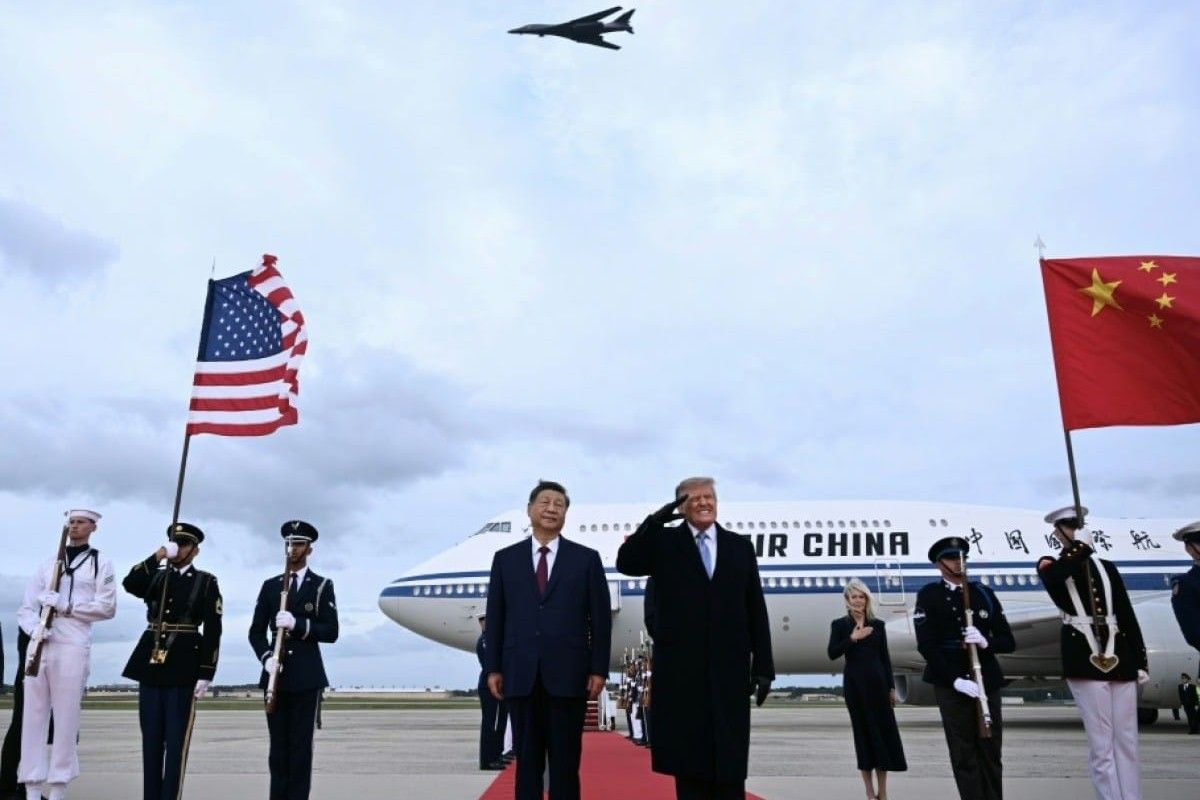
During Trump’s visit to China on May 13 of this past year, Xi Jinping, in an address delivered before Trump and a delegation of prominent business leaders and diplomats, highlighted a new model of international relations between Washington and Beijing based on mutual respect and win-win cooperation (Win-Win Cooperation). At the same time, this paradigm does not turn rivalry into confrontation, but rather channels it through dialogue, while also steering clear of the "Thucydides Trap."
China clarified that the global equation does not necessarily have to be a zero-sum game (Zero-Sum Game); instead, the scale of the market and shared interests provide broad opportunities for both sides to benefit. Through this approach, China subtly and softly preempted the formulation of a directly aggressive policy.
The Chinese President's visit to Washington stands as a testament to the credibility of his discourse by translating the intellectual message and discourse of "Win-Win Cooperation" and peaceful coexistence into concrete action—delivering the message that China’s rise does not signify America’s demise.
Furthermore, during this visit, he laid out the theoretical foundations of his foreign policy, represented by the concept of a new model of major-country relations, which rests upon three core pillars:
First: Non-conflict and non-confrontation, mitigating the risks of sudden shocks, and maintaining crisis hotline diplomacy.
Second: Mutual respect, recognizing differing political systems, and respecting core interests—specifically the question of China’s territorial sovereignty and the Taiwan dossier.
Third: Mutually beneficial cooperation based on a win-win framework, avoiding strategies where one party gains exclusively at the expense of the other.
These reciprocal visits and the establishment of a direct personal diplomacy channel (Personal Diplomacy) between Xi and Trump contributed to reducing military misunderstandings in sensitive regions such as the South China Sea and the Taiwan Strait, while fostering joint regional crisis management. Consequently, the United States was compelled to acknowledge that, in resolving international issues (such as North Korea’s nuclear program), it cannot take any step without Beijing’s role and influence. This communication channel reflects the restructuring of competition through negotiations rather than confrontation, while simultaneously reaching trade agreements and demonstrating China’s resilience and ability to establish its own terms in negotiations.
The peer-level reception of the Chinese President in Washington was, in practice, a signal to the world that the era of unilateral American decision-making has ended, and that the world is moving toward a bipolar–multipolar structure to strengthen alternative international blocs. This compels the United States to reassess the era of its "America First" strategy; on the other hand, China succeeded in presenting itself as a defender of the international system and economic openness. This served to bolster the standing of multipolar alliances, such as:
• The expansion of the BRICS group as a formidable economic pole.
• The development of the Shanghai Cooperation Organisation (SCO) in the security sphere.
• Building global infrastructure through the Belt and Road Initiative (BRI).
• Broadening the choices for the Global South; under this new equilibrium, nations in the Middle East, Africa, and Latin America have learned how to maneuver between Washington and Beijing and diversify their interests.
Conclusion:
Xi Jinping’s visit and his approach to handling Trump constituted a tactical and strategic success for Chinese diplomacy. China succeeded in preventing a rapid eruption of conflict and postponing or neutralizing the "Thucydides Trap." It also imposed the "win-win" discourse onto American strategic thinking as an alternative to military tensions, gently leading Washington to recognize the end of unipolarity and the inevitable emergence of a global multipolar order.


