
Nabaz Mustafa / Executive Director of the Global Civilization Initiative Research
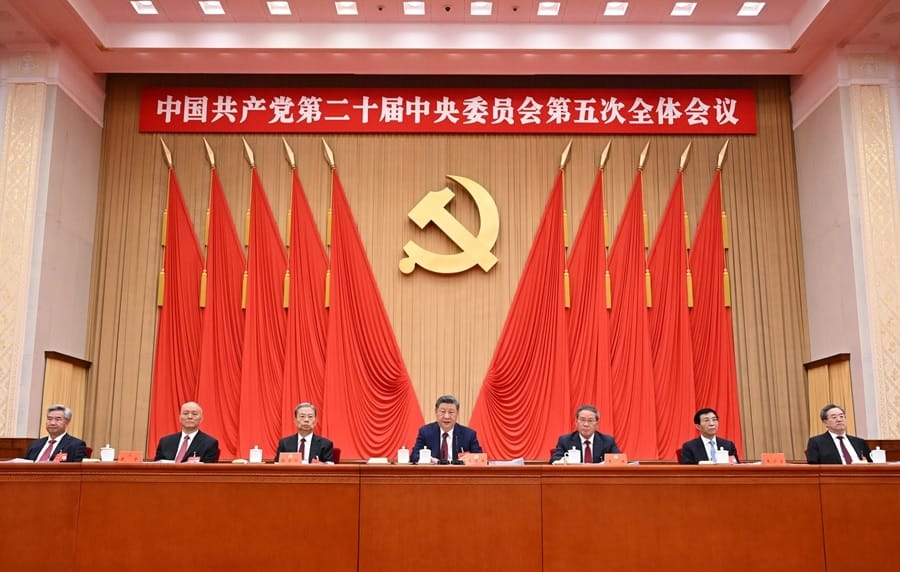
China's unprecedented success in the twenty-first century is the product of profound intellectual engineering and a robust political vision formulated by the Communist Party of China over more than a century of struggle. While many traditional governance models worldwide suffer from fragmentation and an identity crisis, Beijing, through the Fifth Plenary Session of its 20th Central Committee, has once again proved that the greatest source of a state's strength and progress is embodied in the existence of an avant-garde, clean, disciplined, and unified party—a party that has made continuous reform and renewal the law of its survival. Therefore, the main theme of all these meetings focuses on one fundamental concept: comprehensive governance and an iron discipline of the party, manifested through self-revolution.
This meeting reviews the Party's achievements since the 18th National Congress in 2012, the milestone when Xi Jinping assumed power. The Chinese leadership believes that over the past decade, a new horizon of self-reform has been created for a party whose age has exceeded one hundred years. Yet at the same time, they acknowledge that due to rapid global changes and domestic conditions, the Party faces new challenges; therefore, the solution in their view is not compromise, but rather raising the standards of oversight and discipline.
China's success lay in not falling into the trap of blindly imitating external models. China succeeded in fusing Marxist ideas with history, profound civilizational philosophy, and the reality of its own society, producing the concept of "Socialism with Chinese Characteristics for a New Era." This intellectual independence provided a solid foundation for the Chinese people to look to their future with historical self-confidence, proving that the path to progress and modernization is not confined solely to a Western gateway. Nor did it weaken party power; instead, China's new leadership turned technology and modern innovations into an instrument to solidify the pillars of party control over all facets of life and the state.
The pioneering concept of "self-revolution" was born in Chinese political literature as a theoretical and strategic answer to the question of supervising power, as well as emerging as one of the highest philosophies of governance. A party that is over a century old, instead of succumbing to arrogance and inertia, courageously confronts its internal shortcomings. The strategy of "full and rigorous Party governance" and the unyielding anti-corruption campaign in the era of Xi Jinping protected the party from decay and corruption, making the relationship of trust between leadership and the masses and safeguarding the legitimacy of power in the eyes of the people stronger than ever. This continuous cleansing and imposition of strict discipline aims to build an ethical, loyal, and capable cadre that places the public interest above all personal interests, which is the greatest guarantee for preserving the nation's historical achievements.
In addition, the existence of a strong central authority and a unified leadership under the stewardship of Xi Jinping has provided China with a golden opportunity rarely seen in contemporary history, namely "long-term political stability." Under the aegis of this party unity and cohesion, China was able to lift hundreds of millions of people out of poverty in a short span of time, achieve major leaps in advanced science and technology, and launch unprecedented strategic projects such as the Belt and Road Initiative to serve humanity. While most countries cannot plan for the coming decade due to short-term partisan conflicts, the Communist Party of China, from its position as a vanguard force, charts development blueprints for the next fifty and one hundred years.
This intellectual and spiritual harmony, expressed through the slogan "unifying thought and dedicating the soul," has endowed the Chinese people with immense psychological strength to realize the "Chinese Dream" and attain the great rejuvenation of their nation. Today, the strength of the Communist Party functions as an iron bastion to safeguard national sovereignty against rapid global shifts and international pressures that seek to obstruct the future of the Chinese people. Simultaneously, the Communist Party has masterfully blended Marxist ideology with Chinese nationalism, linking its own destiny of survival to the great rejuvenation of the Chinese nation.
We can say that the success of the Chinese model provides an unprecedented intellectual lesson in how state power, moral responsibility, and continuous reform unite. By combining progressive theory, high party discipline, and relentless self-governance, the Communist Party of China has not only been able to secure the trust of its people, but has also presented to the entire world a modern model of effective, stable, and successful governance—a model that proves the key to grand success lies in possessing a strong and dedicated political will to serve the homeland and humanity.


