
Dr. Jihad Hamdan, Member of the Politburo of the Jordanian Communist Party
The Erbil-based Global Civilization Initiative Research Center (GCI), in cooperation with the Consulate General of the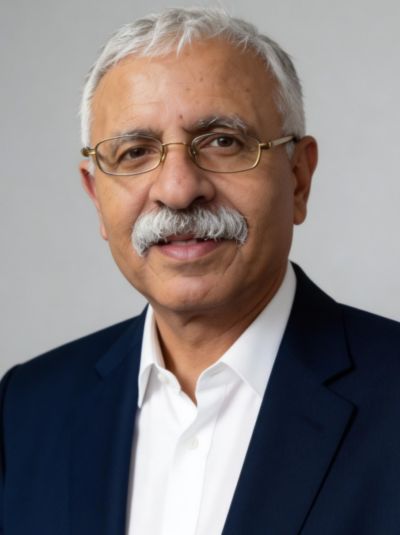 People’s Republic of China, hosted a major event to mark the International Day for Dialogue Among Civilizations on June 17 in Erbil. The event drew a broad spectrum of academic and political figures, featuring a notable turnout of representatives from Kurdistan’s political parties, the governors of Erbil, Halabja, and Sulaymaniyah, a UN representative, and various prominent scholars and politicians.
Also in attendance were delegates from Arab Communist parties across Iraq, Lebanon, and Jordan. The Jordanian Communist Party was represented by Comrade Dr. Jihad Hamdan, member of the Political Bureau, alongside party member Dr. Nizam Assaf. The Iraqi Communist Party was represented by Comrade Bassam Muhyi Khodair, Deputy Secretary of the Central Committee. Representing the Lebanese Communist Party was Comrade Masoud Mohamed, director of the Akhbarna Akhbarkom news website and member of the Center's advisory board.
Opening Remarks and Intellectual Vision
In his opening address, Dr. Kawa Mahmoud, Head of the Center, emphasized that the event was organized in response to the UN’s call to foster a culture of dialogue. He noted that the seminar was taking place at a critical global turning point marked by escalating wars and conflicts. Dr. Mahmoud explained that dialogue serves as a strategic tool to address issues of shared human security, development, and global governance frameworks.
Furthermore, he stressed the urgent need to adopt a fresh, comprehensive outlook on the concept of civilization in the third millennium—one that transcends classical definitions and rejects "clash of civilizations" paradigms. "Equality among civilizations is a fundamental prerequisite," Dr. Mahmoud stated, asserting that no civilization is superior to another and none should view itself as the center of the world. He concluded with a call to end "zero-sum games" in international relations.
The program commenced with a photo exhibition, followed by the official opening ceremony, which included welcoming remarks by Mr. Nabaz Mustafa, the Center's Executive Director.
Session I: Civilizational Dialogue
The first session, titled "Embracing a New Era, Deepening Dialogue and Mutual Learning among Civilizations," was moderated by Comrade Masoud Mohamed. The panel featured a distinguished group of experts:
• Professor Ma Xiaolin: Dean of the Institute of Mediterranean Studies at Zhejiang International Studies University.
• Professor Liu Zhongmin: Professor at the Middle East Studies Institute of Shanghai International Studies University.
• Prof. Dr. Sherzad Najjar: Academic and political science expert.
• Dr. Haval Abubakir: Governor of Sulaymaniyah.
• Comrade Abu Karwan: Secretary of the Kurdistan Communist Party.
• Dr. Sarwar Mohamed: Head of the Center for Chinese Studies at the University of Sulaymaniyah.
Session II: Future Horizons
The second session, titled "Joining Hands for a Shared Future, Writing a New Chapter in People-to-People Ties between China and KRI," was moderated by Ms. Avan Jaf, a lecturer at Salahaddin University. The discussion included:
• Professor Ding Long: Deputy Director and Professor at the Middle East Studies Institute of Shanghai International Studies University.
• Dr. Li Mingbo: Deputy Director and Secretary-General of the Guangzhou Institute of the Greater Bay Area.
• Dr. Wei Liang: Associate Research Fellow at the Institute of West-Asian and African Studies at the Chinese Academy of Social Sciences, and Secretary-General of the Middle East Development and Governance Research Center.
• Mr. Sayed Abdelzaher Sayed Saleh: Member of the Political Bureau of the Egyptian Communist Party.
• Dr. Saman Hussein Omar: Dean of the College of Languages at Salahaddin University.
• Mr. Jing Chengpeng: General Manager of Honor in Iraq.
Cultural and Artistic Activities
The seminar featured vibrant cultural and artistic interludes showcasing cross-cultural connection. The performances included traditional Kurdish music, folk dances (Dabke), and choral numbers performed by Chinese language majors from Salahaddin University, adding a lively artistic touch to the conclusion of the intellectual discussions.
Closing Addresses
The floor was then opened for closing remarks. The first speech was delivered by Comrade Bassam Muhyi Khodair, Deputy Secretary of the Central Committee of the Iraqi Communist Party, who stated:
"This initiative comes at a time when humanity is facing existential threats driven by the aggressive onslaught of predatory capitalism and its neoliberal policies, which plunder the wealth of nations and threaten global peace. Capitalism, particularly its American iteration, has championed the 'Clash of Civilizations' narrative. This agenda seeks to deepen conflict, tension, and division among nations, destroy diverse global cultures, and launch a blatant assault on food security, the environment, and the digital world—all to maintain hegemony over peripheral nations for the benefit of capitalist centers through economic coercion, military intervention, and political meddling."
He added:
"Our Communist Party stands firmly against the current ruling system and aligns itself entirely with the masses suffering under the fire of this abhorrent quota-based regime. We call for a departure from a ruling order that is fundamentally hostile to the aspirations of the Iraqi people. We are actively working to build a broad popular front—uniting national, democratic, and leftist political parties, labor unions, peasant associations, professional federations, and grassroots organizations from all segments of society—to establish a civil, democratic state and achieve social justice."
This was followed by the closing address of Comrade Dr. Jihad Hamdan, member of the Political Bureau of the Jordanian Communist Party, who noted:
"It is an honor to stand before you to share some reflections drawn from today's profound dialogues. Over two rich panel discussions, we have explored the 'Global Civilization Initiative' and the prospects for strengthening human ties between China and the Kurdistan Region of Iraq.
The first session, 'Embracing a New Era, Deepening Dialogue and Mutual Learning among Civilizations,' examined the initiative from a high-level intellectual and philosophical perspective. Speakers discussed the conceptual foundations of mutual learning, emphasizing dialogue as a vital tool to transcend identity conflicts and build bridges of understanding. Meanwhile, the second session, 'Joining Hands for a Shared Future, Writing a New Chapter in People-to-People Ties between China and KRI,' shifted toward practical, real-world horizons. It focused on enhancing grassroots relations, exploring actionable paths for economic partnerships, cultural exchange, and cooperation in technology and shared governance. These enlightening ideas and forward-looking approaches were incredibly timely, rich in insight, and profound in scope.
Throughout this seminar, we heard repeated assurances that this 'new era' of global cooperation is not just a theoretical concept, but a tangible action plan requiring sustained commitment from academia, policymakers, and civil society. These discussions have reminded us that our futures are deeply intertwined, and that solidarity remains our most effective tool to overcome contemporary challenges. It is highly encouraging to see these Chinese initiatives aimed at fostering peace and prosperity through a 'win-win' approach, a point I previously highlighted in a commentary published in the 101st issue of the 'China in Arab Eyes' website.
On behalf of the Jordanian Communist Party, I would like to express my deepest gratitude to the Global Civilization Initiative Research Center (GCI) for organizing this vital event. I extend special thanks to its Head, Dr. Kawa Mahmoud, for his gracious invitation to myself and my comrade, Dr. Nizam Assaf, Director of the Amman Center for Human Rights Studies. We highly commend his dynamic leadership and clear vision, as well as his relentless efforts to forge close ties regionally and internationally to ensure this initiative remains at the forefront of the cultural and political landscape. I also extend my sincere thanks to Mr. Nabaz Mustafa, the Center's Executive Director, for his commendable efforts and his vigilance in managing every fine detail leading up to the opening of this seminar.
Dr. Kawa has assured me that our paths will cross again soon; we look forward to meeting in Amman this coming December for another major seminar organized by the Center in cooperation with the Chinese Embassy in Jordan. We in the Jordanian Communist Party, alongside the Fuad Nassar Academy and the Amman Center for Human Rights Studies, will be honored to host you. We pledge our full support to serve this upcoming event and ensure its success. In closing, let us carry the spirit of this day forward; the connections we have forged here are the seeds of highly promising future partnerships. Thank you all for your rich contributions."
Side Political Meeting Among Communist Parties
On the sidelines of the event, the main headquarters of the Kurdistan Communist Party in Erbil hosted a high-level political meeting on June 16, convened by its Secretary-General, Comrade Abdul Rahman Faris Abdul Rahman (Abu Karwan). The meeting brought together representatives from the Communist parties of Iraq, Kurdistan, Jordan, and Lebanon, serving as a vital leftist platform to assess regional and international dynamics impacting regional stability and the future of its peoples.
The participants began with a critical review of the immense challenges hindering the liberationist and democratic struggle in Arab countries and Kurdistan. The discussion went beyond merely diagnosing the status quo; it clearly defined the vanguard duties of Communists and leftist forces in the region to counter imperialist and Zionist offensives. They reemphasized the organic link between national liberation and the struggle for democracy, public freedoms, equality, and social justice. In this context, attendees stressed the importance of a realistic diagnosis of the Left's crisis in the region, noting that it can be overcome through an objective reading of its rich history of victories, setbacks, hopes, and hardships.
On the socio-economic front, a strategic consensus emerged on the necessity of unifying the efforts of leftist forces under a shared political vision and a joint struggle program that clearly sides with the working and marginalized classes. Participants stressed the need to strengthen the parties' grassroots presence on the ground by championing the causes of those affected by unjust economic policies, standing as a first line of defense for the poor and unemployed, safeguarding women's rights and nationalities, and protecting freedom of expression alongside trade union and political organizing. The meeting concluded that direct engagement and immersion in the daily struggles of the people is the most effective path to building conscious, resilient popular movements equipped with the tools necessary to bring about deep, structural changes in societies and confront future challenges.